
Good Nutrition for ADHD
When discussing good nutrition for ADHD, we should think of the following food groups:
Proteins
Fruits and vegetables
Whole wheat/whole grain carbohydrates
These are the foods that your child with ADHD should be consuming on a regular basis.
What Are Proteins?
When we talk about proteins, this is what I am specifically referring to:
Nuts (peanuts, pistachios, almonds, cashews, macadamia, nuts, etc.)
Nut butters (peanut butter, almond butter, cashew butter, sunflower butter)
Beans (including hummus.)
Lentils
Soy (edamame, tofu, tempeh, soy milk)
Animal protein (chicken, meat, turkey, fish, ham, pork)
Eggs
Dairy (milk, cheese, yogurt)
Proteins are critically important for normal growth and development. Proteins are also necessary for superb brain function. That is, proteins help your child have better focus, improved concentration span, better impulse control, and emotional regulation. These ADHD symptoms improve with healthy proteins.
Go Big On Fruits and Vegetables!
Scientific studies have unequivocally proven that fruits and vegetables make ADHD better. And that is a hard stop. The more fruits and vegetables your child eats, the less symptoms of ADHD will exist in their brain. Fruits and vegetables therefore, are a direct therapeutic intervention for ADHD.
Scientists have also proven that fruits and vegetables make clinical anxiety and depression better. This is a true fact. So, the more fruits and vegetables eaten, the less symptoms of ADHD, anxiety, and depression and individual will experience if they have any of these conditions.
Serve Only the Foods Your Child/Teen Enjoys
You may be asking yourself, "How can I get my child to eat healthy foods?” Or perhaps you may be thinking, "My child is such a picky eater. You have no idea!" Or you may be thinking, “What if she doesn't want to eat the food I serve?”
I get it, I understand these sentiments and I want to show you a way through here.
First, sit down with a piece of paper in horizontal position (landscape orientation) and make three separate columns. Label the first column “Proteins”, the second column “Fruits” and the third column “Veggies”.
Under each category, write a list of those foods that your child has eaten in the past without significant resistance. Think about the proteins and fruits and vegetables that your child has eaten with enthusiasm when hungry. (Refer to the list above of what we consider to be proteins). Make this list and let go of any expectations or desires that your child will eat food that you want them to eat, but they're not willing to eat. We are going to meet your child or teenager exactly where they are. With this strategy, we will create intentional harmony in your kitchen.
You now have your grocery list. Don't stress if you want your child to eat, brussel sprouts, for example, but he refuses. This is not the time to get your child to eat foods they don’t like. We are selecting only the healthy foods you know they’ve eaten in the past. Put this list on your refrigerator. Keep a copy in your backpack or purse so that when you pop into the grocery store, you'll know what to get. This is your exclusive grocery list going forward.
Here is an example of a grocery list a parent created recently- their child is in the 8th grade:
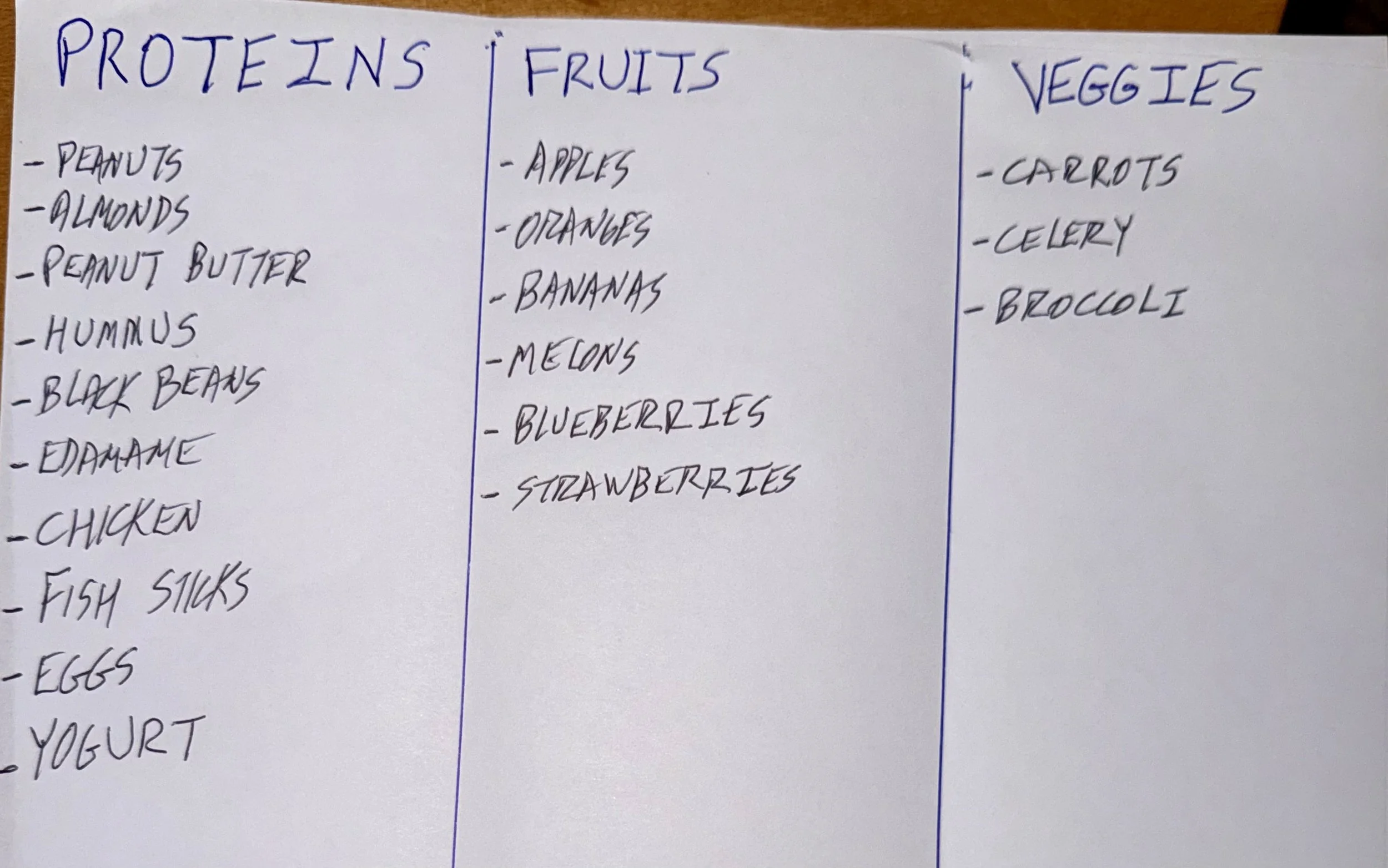
This young teen will eat only three vegetables.
Therefore, these are only the vegetables this family now serves him.
Try to let go of the expectation that your child will eat what you serve them. Your job as a parent is to do only what is in your control. You control which foods you will purchase and serve to your child. Children decide, always, how much they will eat at any given meal, and how much they eat is not in your control.
Remember that your job is not to find “something my kid will eat”. Serve the healthy food and don’t make them any other ‘comfort food’ if they refuse to eat the meal on your table. Nothing bad will happen to them if they skip meals from time to time. Get your Tupperware or other leftover food storage supplies ready. You will have leftovers; serve that food on another day.
You can simply trust your child’s biology. If a child lives in a home with love and harmony, and food is available, they will eat the exact amount of food necessary for optimal growth and development. Even if there are meals where they seem to eat very little.
A grounded and non-reactive parent is a courageous parent. You do not need to negotiate with your child, nor try to convince them to eat. Serve the good food, and then enjoy your own meal with them at the table.
Share with me any questions or challenges that arise. I am always happy to hear from you!
Visit my website at www.lifestylehealthconsultants.com
Or book a free discovery call here:
